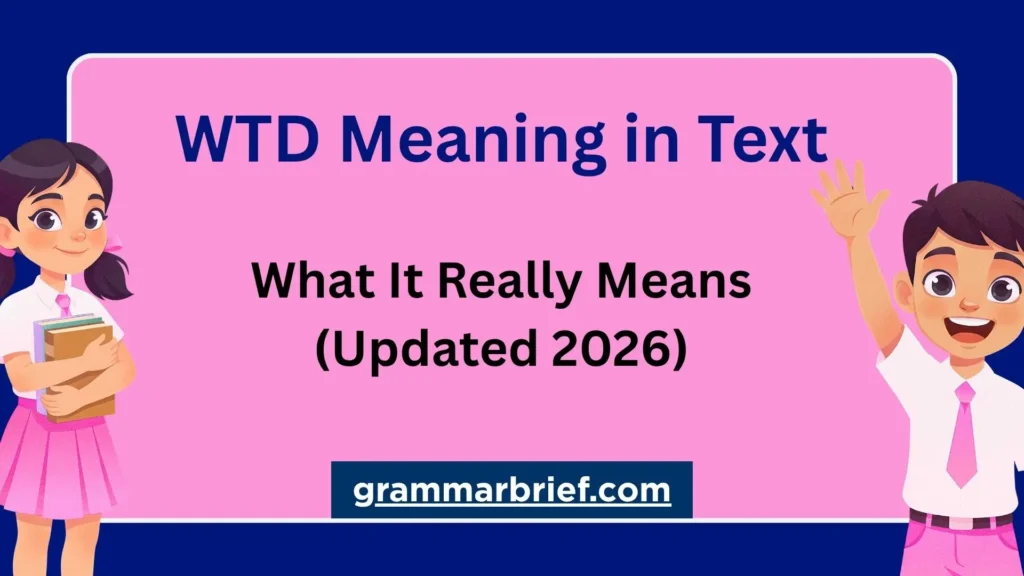

If you’ve seen WTD in a text, DM, group chat, or social media post, its meaning depends on the conversation. In casual texting, WTD usually means “What To Do?” People use it when they want advice, need a suggestion, or are deciding what to do next.
For example, if someone texts “My plans got canceled. WTD?”, they’re essentially asking, “What should I do?” The surrounding messages can help confirm whether that’s the intended meaning.
Quick Answer
WTD usually means “What To Do?” in informal texting and online chat. It can ask for advice, a suggestion, or the next step. Dictionary.com lists WTD as internet slang for “what to do.”
For example:
“We’re free tonight. WTD?”
This usually means:
“What should we do?”
WTD can have other meanings in specific contexts, so the surrounding conversation matters.
Read this also: SMTH Meaning in Text: What It Means and How to Use It
What Does “WTD” Mean in Text?
In texting, WTD most commonly means “What To Do?” It’s an informal abbreviation that turns a longer question into three letters. Dictionary.com specifically documents “what to do” as the internet-slang meaning of WTD.
Someone might use WTD when they:
- Need advice
- Want a suggestion
- Aren’t sure what action to take
- Are making plans
- Want to know the next step
For example:
“I’m free tonight. WTD?”
The sender is probably asking:
“What should we do tonight?”
Context still matters because WTD can have different meanings outside this texting use.
What Does WTD Stand For?
The primary texting expansion is “What To Do?” It usually works as a short request for advice, direction, or a plan.
For example:
“The restaurant is closed. WTD?”
Here, the sender wants to know what to do next.
WTD can also appear when people are making plans:
“Everyone’s free Saturday. WTD?”
In that context, the intended meaning is essentially:
“What should we do?”
Other expansions exist, but they should not automatically be applied to a text message. The conversation topic and surrounding messages provide better clues.
The Most Common Meanings of WTD
1. What To Do?
This is the clearest meaning for casual texting.
People use WTD when they want to know what action to take or what activity to choose.
“My flight was canceled. WTD?”
Meaning:
“What should I do?”
It can also refer to a group decision:
“We have nothing planned tonight. WTD?”
Meaning:
“What should we do tonight?”
2. What’s the Deal?
Some slang references use WTD as a shortened form of “What’s the deal?”
This interpretation focuses on understanding a situation rather than deciding what action to take.
For example:
“WTD with Alex lately?”
Depending on the conversation, the sender may mean:
“What’s the deal with Alex?”
Because this use is more context-dependent, check the surrounding messages before assuming it.
3. Other Context-Specific Meanings
WTD has many specialized expansions outside casual texting. For example, abbreviation references list meanings such as “Work To Do,” “Week To Date,” and several technical, business, governmental, and organizational terms.
These meanings usually depend on the setting. If WTD appears in a report, dashboard, technical discussion, or workplace document, don’t automatically interpret it as texting slang.
How Is WTD Used in Texting?
Friends and Casual Conversations
Friends may use WTD when deciding what to do or looking for suggestions.
“I’m bored. WTD?”
“We’re both free tonight. WTD?”
“The movie is sold out. WTD now?”
In each case, WTD keeps the message short and conversational.
Group Chats
WTD can work as a quick planning prompt in a group chat.
“Okay, everyone’s here. WTD?”
The sender is asking the group to suggest the next activity.
It can also appear when plans suddenly change:
“The concert was canceled. WTD?”
Here, the group is being asked what to do next.
Social Media
You may see WTD in comments, direct messages, replies, and other informal social-media conversations.
For example:
“WTD tonight?”
This may relate to plans.
By contrast:
“WTD with this situation?”
could be asking about what is happening or how to handle the situation.
Dating and Personal Chats
In personal conversations, WTD can appear when people are making plans or deciding what to do next.
“So we’re both free tomorrow. WTD?”
The abbreviation itself isn’t inherently flirty. The relationship, wording, and surrounding conversation determine the tone.
Gaming and Online Communities
Players may use WTD when discussing their next move or deciding how to handle a situation.
“The boss is almost dead. WTD?”
Here, the sender is asking the group what they should do next.
Community-specific terminology can affect the meaning, so don’t interpret the abbreviation in isolation.
WTD Meaning in Different Situations
When Someone Needs Advice
“My flight got canceled. WTD?”
This essentially means:
“What should I do?”
The sender is looking for guidance.
When Someone Is Making Plans
“We’re free tonight. WTD?”
This usually means:
“What should we do tonight?”
It’s a simple planning prompt.
When Someone Faces a Problem
“The app isn’t working. WTD?”
Here, the sender wants to know the next step or how to handle the problem.
When Someone Wants Your Opinion
A message such as:
“Should I take the new job? WTD?”
could be intended as a request for your opinion. However, “What do you think?” is much clearer when an opinion is the main point.
That distinction matters: “What To Do?” focuses on action, while “What do you think?” explicitly asks for an opinion.
WTD Examples in Real Text Messages
Example 1: Making Weekend Plans
Alex: “What are you doing Saturday?”
Sam: “Nothing yet. WTD?”
Meaning: “What should we do?”
Example 2: A Canceled Plan
Alex: “The restaurant is fully booked.”
Sam: “WTD now?”
Meaning: “What should we do now?”
Example 3: Asking for Advice
Alex: “I missed the deadline. WTD?”
Sam: “Talk to your teacher and explain what happened.”
Meaning: Alex is asking what action to take.
Example 4: Group Chat
Alex: “Everyone’s free tonight. WTD?”
Sam: “Movie?”
Meaning: Alex is asking the group to choose an activity.
Example 5: Unexpected News
Alex: “The event got moved to tomorrow.”
Sam: “Seriously? WTD?”
Meaning: Depending on the previous conversation, this could ask what everyone should do next.
Example 6: Asking About a Situation
Alex: “WTD with Jordan? He hasn’t replied.”
Sam: “Maybe he’s busy.”
Meaning: Here, “What’s the deal with Jordan?” may fit better than “What should I do?”
Example 7: Ambiguous Use
Alex: “I’m thinking about quitting. WTD?”
Sam: “What do you mean?”
Meaning: The abbreviation alone doesn’t make the intended interpretation completely clear. Asking for clarification can prevent a misunderstanding.
How to Tell Which WTD Meaning Someone Intended
Read the Complete Message
Don’t interpret WTD from the abbreviation alone. Read the words around it.
Compare:
“I’m bored tonight. WTD?”
with:
“WTD with Chris lately?”
The first points toward deciding what to do. The second sounds more like a question about a situation.
Check the Surrounding Messages
The previous few messages can provide important context.
If everyone has been discussing weekend plans, WTD probably relates to those plans. If the conversation has focused on someone’s unusual behavior, another interpretation may fit better.
Look at the Conversation Topic
Ask what the conversation is actually about:
- Plans → “What to do?” is likely.
- A confusing situation → “What’s the deal?” may fit.
- An opinion → “What do you think?” may be intended, but WTD is less precise for this purpose.
Consider the Setting
A text between friends is different from a business report.
In casual messaging, WTD can function as shorthand. In professional or specialized settings, the same letters may have another meaning.
Pay Attention to Tone
Punctuation and surrounding words can affect how a short message sounds.
Compare:
“WTD?”
with:
“WTD now??”
The second can sound more urgent or frustrated, depending on the conversation.
Ask for Clarification When Needed
If you’re unsure, simply ask:
“Do you mean what should we do?”
or:
“What do you mean by WTD here?”
A quick clarification is better than answering the wrong question.
Is WTD Formal or Informal?
WTD is informal. It fits casual texts, online chats, group conversations, and other settings where abbreviations are expected.
It’s less suitable when you need maximum clarity.
For example, instead of:
“WTD about the client request?”
a workplace message could say:
“What should we do about the client request?”
The complete wording makes the intended question clearer.
Is WTD Rude, Flirty, or Offensive?
WTD isn’t automatically rude, flirty, or offensive. Its tone mainly comes from the surrounding context.
Neutral Tone
“WTD for dinner?”
This is a straightforward request for a suggestion.
Curious Tone
“WTD with that new schedule?”
Here, the sender may simply want clarification.
Slightly Annoyed Tone
“WTD now? You said you’d handle it.”
The abbreviation isn’t inherently rude. The surrounding wording creates the more frustrated tone.
Flirty Tone
“We’re both free tonight 👀 WTD?”
The message could feel playful or flirty because of the situation and emoji. The abbreviation itself doesn’t create that meaning.
How to Reply When Someone Says “WTD”
Your response should match what the sender appears to be asking.
Casual Replies
If they’re asking what to do, give a direct suggestion:
- “Let’s grab dinner.”
- “We could just stay home.”
- “How about a movie?”
- “Let’s go for a drive.”
Funny Replies
With close friends, you can keep the response playful:
- “Survive, obviously.”
- “First, we need snacks.”
- “I vote for doing absolutely nothing.”
Neutral Replies
If you want to keep things simple:
- “We could meet around 7.”
- “How about dinner?”
- “Maybe we should wait until tomorrow.”
- “I’d call them and ask.”
Professional Replies
If WTD appears in a work conversation and the meaning is clear, respond directly.
For important communication, complete wording is safer:
“I recommend contacting the client first.”
WTD vs. Similar Texting Abbreviations
| Abbreviation | Common meaning | Main purpose |
| WTD | What To Do? | Asking about an action, plan, or next step |
| WYD | What You Doing? / What Are You Doing? | Asking what someone is doing |
| WDYT | What Do You Think? | Asking for an opinion |
| WTM | What’s the matter? / other meanings | Depends on context |
| WTW | What’s the word? / other meanings | Depends on context |
These abbreviations can look similar, but they aren’t interchangeable.
For example:
“WYD tonight?”
asks what someone is doing.
“WTD tonight?”
usually asks what someone should do or what activity they should choose.
“WDYT about this?”
directly asks for an opinion.
Common Misunderstandings About WTD
Mistaking WTD for an Insult
WTD isn’t automatically an insult. In casual texting, it can simply be a short way to ask what to do.
The tone depends on the rest of the message.
Confusing WTD With Similar Abbreviations
WTD can be confused with abbreviations such as WYD or WDYT because the letters look similar.
Always consider the actual wording and conversation topic.
Assuming WTD Has Only One Meaning
“What To Do?” is the primary casual-texting meaning, but other interpretations can appear.
That’s why context remains important.
Misreading the Tone
A short message contains little emotional information.
“WTD?” could sound neutral, curious, urgent, or frustrated depending on what came before it.
Treating WTD as Formal English
WTD is shorthand. It isn’t the best choice when your audience may not recognize the abbreviation.
When clarity matters, write the complete question.
WTD in Professional Communication
When WTD May Cause Confusion
A workplace reader may interpret WTD differently based on the field or surrounding terminology.
For example, an abbreviation in a report may have a specialized meaning rather than a texting meaning. Abbreviation references list numerous non-texting expansions for WTD.
Why Context Matters in Workplace Chats
Even casual workplace messaging benefits from clear language.
If you’re discussing deadlines, clients, money, or important decisions, ambiguity can create unnecessary confusion.
Better Alternatives in Emails and Formal Messages
Instead of WTD, consider:
- “What should we do?”
- “What’s the next step?”
- “What do you recommend?”
- “How should we handle this?”
These phrases are clearer across different professional settings.
When You Should Avoid Using WTD
Professional Settings
Avoid WTD in:
- Formal emails
- Client communication
- Academic writing
- Important workplace messages
- Documents that require precise wording
Cross-Cultural Chats
Not everyone interprets English texting abbreviations in the same way.
If you’re communicating with someone who may not know the shorthand, spelling out the phrase is safer.
Sensitive Situations
Use clear language when the subject is serious or a misunderstanding could have consequences.
Instead of:
“WTD?”
write:
“What should we do next?”
The extra words make your intention clearer.
Read this also: IDTS Meaning in Text: What Does IDTS Mean?
Better Alternatives to WTD
Choose the alternative based on what you actually want to ask:
- “What should I do?” — asking for personal advice
- “What should we do?” — making a group decision
- “What’s the next step?” — discussing a process
- “What do you think?” — asking for an opinion
- “What’s the deal?” — asking for an explanation
- “How should we handle this?” — asking for guidance in a professional setting
Using the full phrase is especially useful when the context isn’t obvious.
Frequently Asked Questions
Yes. A message such as “WTD?” can work when both people already understand the context. Without context, though, the meaning may be less clear.
A question mark is natural when WTD means “What To Do?”, as in “WTD?” or “WTD now?” Additional punctuation can affect the tone but doesn’t change the basic meaning.
Yes. The intended subject comes from the conversation. “WTD?” could mean “What should I do?” or “What should we do?” depending on who is involved.
It can be, but only if you’re confident the person understands the abbreviation. With a new contact or unfamiliar audience, writing “What should we do?” is clearer.
Usually, no. WTD, wtd, and similar capitalization generally refer to the same abbreviation. The surrounding context matters more than capitalization.
Look at the messages immediately before it and identify the conversation topic. If the intended meaning still isn’t clear, ask the sender directly rather than guessing.
Conclusion
WTD usually means “What To Do?” in casual texting. The exact meaning depends on the message, conversation topic, and tone, especially when the abbreviation appears in an unusual context.
If you’re unsure what someone means by WTD, check the surrounding messages before replying. When clarity matters, simply ask what they mean or use the full phrase instead.