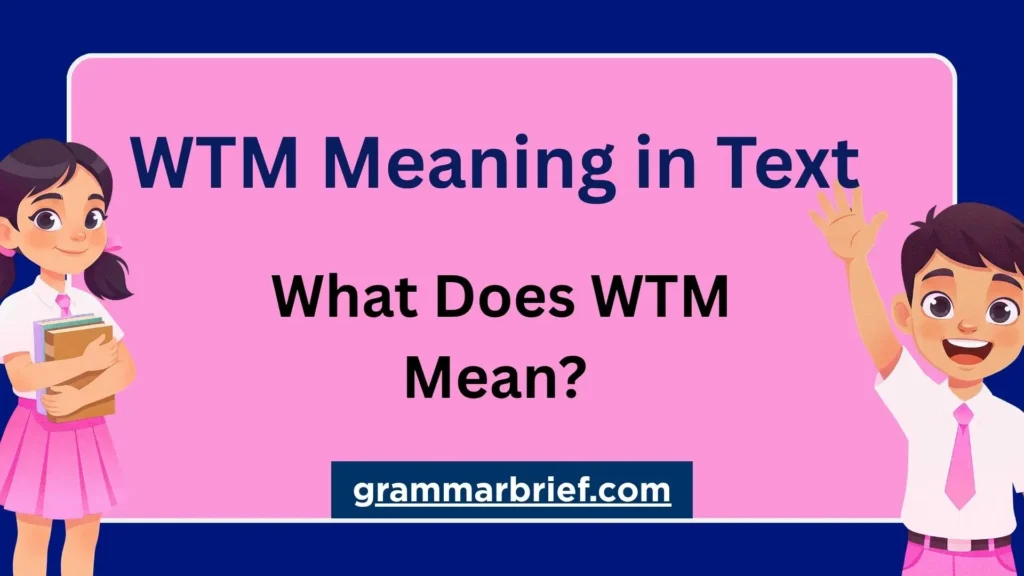

If you’re searching for the WTM meaning in text, it usually means “What’s the move?” In casual chats, it asks about plans, an activity, or what to do next. For example, “WTM tonight?” can mean “What’s the plan tonight?” or “What are we doing tonight?”
WTM can also mean “What’s the matter?” in a different context. If someone is asking about a problem or checking on you, that interpretation may fit better. The surrounding conversation usually tells you which meaning the sender intends.
What Does “What’s the Move?” Mean?
“What’s the move?” is an informal way to ask about a plan, next activity, decision, or course of action. The word “move” doesn’t necessarily mean physically going somewhere. Here, it refers to what someone plans to do next.
For example:
“WTM after work?”
This means something like:
“What’s the plan after work?”
Likewise, “WTM this weekend?” can mean “What are we doing this weekend?” or “What should we do this weekend?” The question is broad enough for the other person to suggest an activity, place, or plan.
Read this also: HY Meaning: What Does HY Mean in Text?
How People Use WTM in Text Messages
Asking About Plans
People can use WTM when they’re trying to make plans for later.
Examples:
- “WTM tonight?”
- “WTM this weekend?”
- “WTM after class?”
- “Everyone’s free Saturday. WTM?”
In these examples, the sender is asking about a plan rather than someone’s current location.
Deciding What to Do Next
WTM can also ask what should happen next.
For example:
“The movie’s over. WTM?”
Here, the sender is essentially asking, “What should we do now?”
It doesn’t require a detailed itinerary. A simple suggestion, such as getting food or going home, could answer the question.
Making Social Plans
WTM can be useful when friends are discussing dinner, outings, games, meetups, or other activities.
For example:
“I’m free after 7. WTM?”
Depending on the conversation, the sender may be asking what the group has planned or inviting someone to suggest an activity.
WTM Examples in Texting
Here are a few examples that show how WTM works in different casual conversations.
Friends making weekend plans
Alex: “You free Saturday?”
Jordan: “Yeah, WTM?”
Alex: “Let’s grab dinner.”
Here, WTM means “What’s the move?” or “What’s the plan?”
Group chat
Sam: “Everyone’s done with work.”
Chris: “WTM tonight?”
Taylor: “Food and a movie?”
The sender is asking the group to decide what to do.
Asking about tonight
“WTM tonight? I’m finally free.”
This asks about the evening’s plan and can also show that the sender is available to join.
Asking about the next step
“We finished dinner. WTM now?”
Here, “the move” means the next activity or decision.
How Context Changes the Meaning of WTM
WTM doesn’t always have one fixed interpretation. The messages around it can reveal what the sender means.
Look at the Conversation Topic
If the conversation is about plans, activities, or going somewhere, “What’s the move?” usually fits.
For example:
“Are you free Friday?”
“Yeah.”
“WTM?”
The topic clearly involves making plans.
However, a conversation about someone’s mood or a problem can point toward “What’s the matter?”
“You’ve been quiet all day. WTM?”
Here, the sender may be asking what’s wrong.
Check the Surrounding Words
Nearby words can provide useful clues.
Words such as tonight, weekend, after work, dinner, party, game, and later often point toward plans.
By contrast, messages about someone feeling upset, acting differently, or dealing with a problem can support the “What’s the matter?” interpretation.
If the entire message is simply “WTM?”, read the previous messages before deciding what it means.
Consider the Tone
WTM is casual, but the surrounding wording can change how it feels.
Compare:
“WTM tonight? 👀”
with:
“WTM?”
The first may sound more energetic or socially inviting. The second is more open-ended.
Still, WTM itself isn’t automatically flirty, rude, serious, or playful. Those qualities depend on the broader conversation.
Consider Your Relationship
The same abbreviation can appear between friends, acquaintances, or people who are dating.
For example:
“WTM this weekend?”
A dating partner might use it while making plans. A friend could send exactly the same message for a group outing.
So, the abbreviation alone doesn’t establish romantic intent.
Can WTM Mean “What’s the Matter?”
Yes. WTM can also mean “What’s the matter?” This interpretation can fit when someone is asking about a problem or checking whether another person is okay. Slang references document both “What’s the move?” and “What’s the matter?” as meanings of WTM.
For example:
“You don’t seem like yourself today. WTM?”
In this context, the sender may mean “What’s the matter?” rather than “What’s the plan?”
Compare:
- “WTM tonight?” → likely “What’s the move?”
- “You’ve been really quiet. WTM?” → potentially “What’s the matter?”
The letters stay the same, but the context changes the interpretation.
WTM on Social Media and Messaging Platforms
WTM can appear in text messages, direct messages, group chats, and social media conversations. Its basic meaning generally comes from the conversation rather than the platform. Slang references specifically document its use on social platforms such as TikTok and Snapchat.
WTM on WhatsApp
In a WhatsApp chat, someone might write:
“WTM after dinner?”
If the conversation is about plans, this means something like “What should we do after dinner?”
WTM on Instagram
In an Instagram DM, WTM can be used when people are discussing plans or activities.
“WTM this weekend?”
The context still determines the intended meaning.
WTM on TikTok
If you see WTM in a TikTok comment or message, look at the surrounding conversation. When the topic involves plans or activities, “What’s the move?” is the relevant interpretation.
WTM on Snapchat
WTM can also appear in casual Snapchat conversations. If the messages involve meeting up or deciding what to do, “What’s the move?” may fit the context.
WTM in Group Chats and DMs
Group chats are useful places for short questions about plans.
“Everyone’s free tonight. WTM?”
The sender is asking the group to suggest or choose the next activity.
Is WTM Slang or Formal English?
WTM is informal texting slang, so it works best in casual communication.
It can fit naturally in:
- Messages with friends
- Casual group chats
- Informal direct messages
- Conversations where the recipient understands texting slang
For professional or formal communication, spelling out the question is clearer.
Instead of:
“WTM for tomorrow?”
you could write:
“What’s the plan for tomorrow?”
That approach avoids confusion, especially when you don’t know whether the recipient recognizes the abbreviation.
Is WTM Rude or Flirty?
Is WTM Rude?
WTM isn’t inherently rude. However, a very short message can sometimes sound blunt depending on the relationship and conversation.
For example:
“WTM?”
may sound completely normal between close friends. With someone you barely know, it may feel less polished because it uses slang and gives little context.
The abbreviation itself doesn’t determine whether the message is rude.
Is WTM Flirty?
WTM isn’t inherently flirty either.
For example:
“WTM Friday night?”
could be part of a dating conversation. It could just as easily be a friend asking about weekend plans.
To understand romantic intent, look at the broader conversation rather than the abbreviation alone.
How to Reply to “WTM?”
Your best response depends on what the sender means.
If You Already Have a Plan
Give the plan directly:
“Dinner at 8, then maybe a movie.”
Or:
“We’re meeting downtown around 7.”
If You Haven’t Made Plans
You can invite the other person to suggest something:
“No plans yet. What are you thinking?”
Or:
“Not sure yet. I’m open to ideas.”
If You Want to Suggest Something
Offer a specific activity:
“Let’s grab tacos around 8.”
Or:
“How about bowling tonight?”
If You’re Not Available
Give a clear answer and suggest another time if appropriate:
“I’m busy tonight, but I’m free tomorrow.”
Or:
“Can’t tonight. Maybe Saturday?”
If You Don’t Understand WTM
You don’t need to guess.
“What do you mean by WTM?”
This is especially useful when the conversation doesn’t make it clear whether the sender means “What’s the move?” or “What’s the matter?”
Read this also: What Does IONK Mean in Text? Meaning, Examples, and How to Use It
WTM vs. Similar Texting Abbreviations
WTM can look similar to other texting abbreviations, but these expressions ask different questions.
| Abbreviation | Typical meaning | Main purpose |
| WTM | What’s the move? | Asking about plans or what to do |
| WYD | What are you doing? | Asking about someone’s current activity |
| WYA | Where you at? | Asking someone’s location |
| HMU | Hit me up | Asking someone to contact you |
For example:
WYD? → “What are you doing?”
WTM? → “What’s the plan?”
These expressions can overlap in casual conversations, but they focus on different things.
Common Mistakes When Interpreting WTM
A few assumptions can lead to the wrong interpretation:
- Assuming WTM always has one meaning: Context can change the intended expansion.
- Assuming it is automatically flirty: Friends can use WTM when making ordinary plans.
- Assuming it is rude: Its tone depends on the conversation and relationship.
- Confusing WTM with WYD: WTM usually focuses on plans or the next activity, while WYD asks about someone’s current activity.
- Using it in formal communication: Clearer wording is usually better when the audience may not know the abbreviation.
- Ignoring surrounding messages: The conversation often provides the strongest clue.
A Simple Way to Understand WTM From Context
When you see WTM and aren’t sure what it means, use this quick process:
- Read the messages before and after it.
- Identify the topic. Is the conversation about plans or a problem?
- Check nearby words. Words such as “tonight” or “weekend” can point toward plans.
- Consider the tone and relationship. A casual friend may use WTM differently from someone in a formal setting.
- Ask if you’re still unsure. A quick clarification is better than guessing.
A useful rule is simple: if the conversation is about plans, “What’s the move?” is the natural interpretation; if it’s about a problem, “What’s the matter?” may fit better.
Frequently Asked Questions About WTM
No. “What’s the move?” is a common texting meaning, but WTM can mean something else depending on context. “What’s the matter?” is one possible alternative.
Yes. Someone might use WTM in a group chat to ask what everyone wants to do or what the plans are.
You can, but WTM is casual slang. For a professional or formal conversation, it’s clearer to write the question in full.
Ask the person what they mean. A simple response such as “What do you mean by WTM?” avoids guessing and keeps the conversation clear.
Generally, it’s better to avoid texting abbreviations like WTM in formal or professional communication. Use a clear phrase such as “What are the plans?” instead.
Usually, no. WTM, wtm, and similar capitalization styles generally communicate the same abbreviation. The conversation provides the important context.
Final Takeaway
WTM usually means “What’s the move?” when it appears in a casual text, group chat, or social media message. It typically asks about plans, activities, or what to do next.
If the conversation involves a problem or concern, WTM can instead mean “What’s the matter?” When the meaning isn’t obvious, check the surrounding messages before replying.