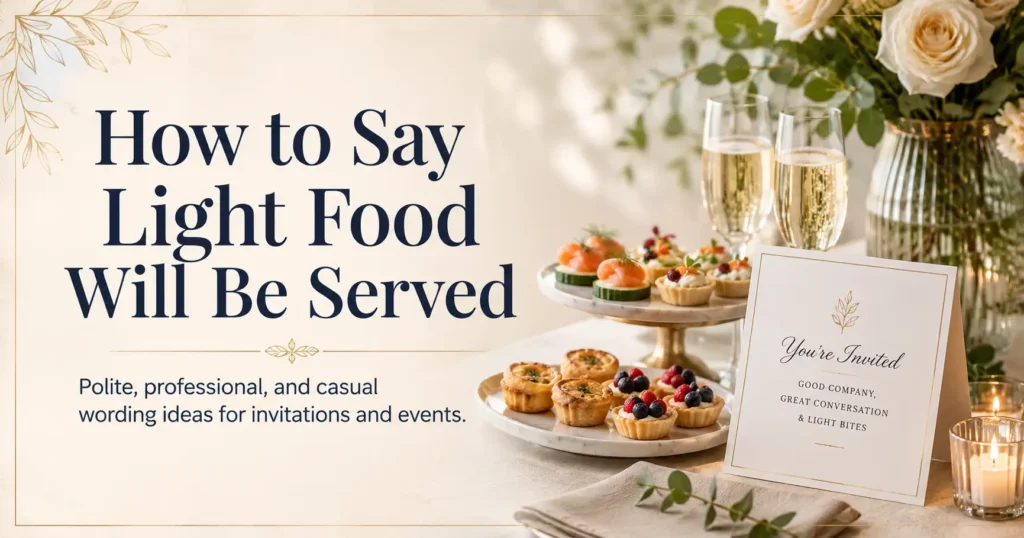

Good food wording helps guests understand what to expect at an event. When an invitation says light food will be served, people usually expect small snacks, finger foods, simple dishes, drinks, or refreshments instead of a full meal. This phrase creates clear expectations, reduces confusion, and helps with meal planning for meetings, parties, and short events.
The best wording depends on your audience, event mood, and tone. A corporate email may need professional or formal wording, while a birthday text or casual invite can use simple wording or a creative phrase. For weddings, elegant wording often works better. You can say food will be served, light refreshments will be available, or light bites and drinks will be provided.
Strong invitation wording should sound natural, welcoming, and helpful. Avoid repetitive content, stiff language, or a robotic sentence. Choose right words that fit the moment, add warmth, and improve the guest experience. Clear wording makes every event invitation easier to understand and more comfortable for everyone. It also prevents guests from arriving hungry or expecting more food than the host plans to serve at the gathering.
What Does “Light Food Will Be Served” Mean?
“Light food” usually refers to food that satisfies guests without replacing a substantial breakfast, lunch, or dinner.
Think of it as the middle ground between offering nothing and providing a complete meal.
Light food may include:
- Sandwiches or wraps
- Fruit
- Cheese and crackers
- Pastries
- Cookies
- Chips and dips
- Vegetable trays
- Small appetizers
- Canapés
- Mini desserts
- Coffee, tea, juice, or soft drinks
The exact meaning changes with the event. At an early-morning seminar, pastries and coffee may count as light refreshments. At an evening reception, guests might expect appetizers, sliders, or hors d’oeuvres.
Light Food vs. Light Refreshments vs. a Full Meal
These phrases aren’t interchangeable.
| Wording | What It Usually Suggests | Typical Examples |
| Light refreshments | Drinks plus small snacks | Coffee, tea, cookies, fruit |
| Light bites | Small portions of casual food | Sliders, skewers, mini sandwiches |
| Finger foods | Foods eaten without utensils | Wings, canapés, spring rolls |
| Hors d’oeuvres | Small, usually elegant appetizers | Crostini, tartlets, shrimp |
| Light meal | More substantial but not heavy | Soup, sandwiches, salad |
| Full meal | Complete breakfast, lunch, or dinner | Entrée, sides, dessert |
The distinction matters because your guests may plan their day around your invitation.
Read this also: Other Ways to Say “Have a Good Day”: 50+ Professional, Friendly & Creative Alternatives
What Guests Usually Expect
Guests naturally translate invitation wording into practical expectations.
“Refreshments will be served” sounds modest. “A light meal will be provided” suggests enough food to replace a small meal. “Dinner will be served” creates a much bigger expectation.
A simple rule works well:
Describe the food you’re actually serving, not the experience you want the wording to sound like.
Elegant language helps. Accuracy matters more.
Best Ways to Mention Light Food
For most events, simple wording works best. Guests shouldn’t need to decode your invitation.
Here are some dependable choices:
- Light refreshments will be served.
- Light refreshments will be available.
- Light bites will be served.
- Light bites and beverages will be provided.
- Snacks and refreshments will be available.
- Appetizers will be served.
- Finger foods will be available.
- Hors d’oeuvres will be served.
- A selection of light fare will be available.
- A light meal will be provided.
“Light refreshments will be served” remains one of the safest phrases because it sounds polite without promising a complete meal.
Professional Ways to Say Light Food Will Be Served
Business events usually need wording that feels polished but straightforward.
Avoid overly playful phrases unless the company culture supports them. A financial seminar invitation probably shouldn’t announce “tasty treats and good vibes.” A creative agency gathering could get away with it.
Professional options include:
- Light refreshments will be provided.
- Refreshments and light snacks will be available.
- Attendees are invited to enjoy light refreshments.
- Light catering will be provided.
- Complimentary refreshments will be available.
- A selection of light bites and beverages will be served.
For conferences and training sessions, specificity can help even more.
For example:
“Coffee, tea, and light refreshments will be available before the session.”
Guests immediately know what to expect.
Formal Ways to Mention Light Food on an Invitation
Formal events often use slightly more polished vocabulary.
Good options include:
- Light refreshments to follow.
- Hors d’oeuvres and beverages will be served.
- Guests are invited to enjoy light fare following the ceremony.
- A light reception will follow.
- Please join us for refreshments following the event.
- A selection of canapés and beverages will be offered.
The phrase you choose should reflect the menu.
If servers will circulate trays of elegant appetizers at a wedding reception, “hors d’oeuvres will be served” fits beautifully.
If you’re putting cookies and lemonade on a table after a ceremony, “light refreshments will follow” feels more accurate.
Casual and Friendly Ways to Mention Light Food
A casual gathering gives you more freedom.
You don’t need stiff invitation language for a neighborhood party, birthday celebration, or relaxed get-together.
Try:
- Snacks and drinks will be available.
- Join us for light bites and drinks.
- We’ll have some snacks ready for you.
- Come enjoy good company and a few bites.
- Light bites are on us.
- Grab a snack and stay awhile.
Casual wording feels welcoming because it sounds like something a real host would say.
Still, avoid exaggeration.
“Come hungry!” sounds fun. However, guests may reasonably expect enough food to fill them up. Don’t use it when you’re only putting out a bowl of pretzels and a cheese plate.
Wording for Different Types of Events
Different occasions create different food expectations. Matching your wording to the event makes the invitation clearer.
Business Meetings and Corporate Events
Professional gatherings benefit from direct language.
Examples:
“Light refreshments will be available during the networking session.”
“Coffee, beverages, and light snacks will be provided.”
If lunch isn’t included, saying so may also help when the meeting crosses noon.
Workshops, Seminars, and Training Sessions
Long sessions make food information particularly important.
A good invitation might say:
“Coffee and light refreshments will be available during the morning break.”
That sentence tells participants both what they’ll receive and when they’ll receive it.
Weddings and Receptions
Wedding wording should match the style of the reception.
For a cocktail-style gathering:
“Hors d’oeuvres and beverages will be served following the ceremony.”
For a simple reception:
“Please join us for cake and light refreshments after the ceremony.”
The second version works especially well because guests know this isn’t a full dinner.
Birthday Parties and Celebrations
Keep things natural.
For example:
“Join us for cake, snacks, and drinks as we celebrate Maya’s birthday.”
Specific food details often sound warmer than formal hospitality terms.
Networking Events
Networking events frequently happen around dinner time. That creates potential confusion.
If you’re only serving appetizers, write:
“Light bites and beverages will be available throughout the evening.”
Guests can decide whether they need dinner before or after the event.
Church and Community Gatherings
Simple wording usually works best:
“Light refreshments and fellowship will follow the program.”
This phrase feels welcoming without implying a full meal.
Open Houses and Informal Gatherings
For an open house, guests may arrive at different times.
Try:
“Drop in anytime between 2:00 and 5:00 p.m. Light bites and refreshments will be available.”
The wording suits the flexible nature of the gathering.
Memorials and Celebrations of Life
Use gentle, respectful language.
For example:
“The family invites guests to remain for light refreshments following the service.”
There’s no need for clever food wording in a sensitive setting.
How to Mention Light Food on an Invitation
Invitation wording works best when food information appears near the event schedule or closing details.
Formal Invitation Example
Reception to follow the ceremony. Light refreshments and beverages will be served.
Business Event Example
Join us for an evening of networking and conversation. Light appetizers and beverages will be provided.
Wedding Reception Example
Please join us after the ceremony for cocktails, hors d’oeuvres, and cake.
Birthday Invitation Example
Come celebrate with us! Snacks, cake, and drinks will be available throughout the party.
Casual Gathering Example
Stop by, say hello, and grab a bite. We’ll have snacks and drinks waiting.
Each version communicates roughly the same idea while matching a different atmosphere.
Short Phrases for Cards, Emails, and Messages
Sometimes you only have a few words of space.
For invitation cards, try:
- Light refreshments to follow
- Refreshments will be served
- Light bites provided
- Snacks and beverages available
- Reception with light refreshments
For email invitations:
“Light refreshments will be provided during the event.”
For texts or WhatsApp messages:
“We’ll have snacks and drinks there.”
For social event posts:
“Come by for conversation, light bites, and drinks.”
Short doesn’t have to mean vague.
How to Tell Guests Exactly What Food to Expect
Specific words create different expectations.
When to Say “Refreshments”
Use refreshments when you’re offering drinks with small snacks.
Typical examples include coffee, tea, pastries, cookies, or fruit.
When to Say “Light Bites”
“Light bites” works well for modern social and business events.
It usually suggests appetizers or small portions rather than packaged snacks.
When to Say “Appetizers”
Choose “appetizers” when the menu includes recognizable starter dishes.
Examples include:
- Mini meatballs
- Bruschetta
- Stuffed mushrooms
- Spring rolls
- Small skewers
When to Say “Finger Foods”
Finger foods work especially well for casual parties where people mingle.
The term suggests guests won’t need a formal place setting.
When to Say “Hors d’Oeuvres”
“Hors d’oeuvres” sounds more formal and upscale.
Use it for cocktail receptions, weddings, galas, and elegant business events.
When to Say “Light Meal”
Choose “light meal” when guests will receive enough food to feel reasonably satisfied.
Soup with sandwiches, a salad buffet, or wraps with sides can qualify.
Light Food Wording by Time of Day
Timing changes expectations.
Morning Events
For morning gatherings, clear phrases include:
- Coffee and pastries will be provided
- A light breakfast will be served
- Morning refreshments will be available
If you’re serving only coffee and cookies, don’t call it breakfast.
Afternoon Events
Afternoon events naturally suit lighter offerings.
You might say:
“Afternoon refreshments and light snacks will be served.”
Guests rarely assume this means lunch unless the event starts around noon.
Evening Events
Evening wording requires more care because people often expect dinner.
If you aren’t serving a full meal, make that clear.
Try:
“Light appetizers and beverages will be available throughout the evening.”
That single sentence can prevent a room full of hungry guests.
Light Refreshments vs. Light Meal: Which Should You Choose?
The key difference is substance.
| If You’re Serving… | Better Wording |
| Coffee and cookies | Light refreshments |
| Fruit, pastries, tea, coffee | Refreshments |
| Chips, dips, and small snacks | Snacks and beverages |
| Sliders and appetizer trays | Light bites |
| Canapés and cocktails | Hors d’oeuvres |
| Sandwiches, salad, and dessert | Light meal |
When uncertain, describe the actual menu.
“Coffee, pastries, and fruit will be available” removes almost all ambiguity.
How to Avoid Misleading Guests About Food
Good invitation wording manages expectations.
Don’t Say “Dinner” Unless You’re Serving Dinner
Dinner normally implies a substantial evening meal.
A tray of appetizers doesn’t qualify.
Avoid “Meal Provided” When You Mean Snacks
Guests may skip eating beforehand when they read “meal provided.”
If the food won’t realistically replace lunch or dinner, choose another phrase.
Mention Drinks Separately When Necessary
“Refreshments” can mean food, drinks, or both.
For maximum clarity, say:
“Light snacks and nonalcoholic beverages will be available.”
Be Extra Clear Around Meal Times
An event scheduled from 6:00 to 8:00 p.m. overlaps with dinner.
Guests need to know whether they’re getting dinner, appetizers, or nothing substantial.
Mention Dietary Options When Relevant
If your event serves a diverse group, useful notes can include:
- Vegetarian options available
- Vegan selections provided
- Gluten-free options available upon request
- Please share dietary restrictions when registering
These details help guests prepare without cluttering the invitation.
Common Mistakes With Light Food Wording
A few wording mistakes create unnecessary confusion.
Sounding Too Formal
“Culinary offerings will be presented” may technically work. Yet it sounds unnatural for almost every ordinary event.
Simple language wins.
Making Snacks Sound Like a Meal
Don’t oversell.
If you’re serving crackers, cookies, and soda, call them refreshments or snacks.
Being Too Vague
“Food available” tells guests almost nothing.
Are you serving dinner? Chips? Cupcakes?
A few extra words solve the problem.
Choosing Fancy Words That Don’t Match the Menu
“Hors d’oeuvres” creates a different expectation than “snacks.”
Use the word that actually fits.
Forgetting the Event Time
Food wording matters most when an event overlaps breakfast, lunch, or dinner.
Guests plan accordingly.
Read this also: Restaurant Guru Meaning: What the Phrase and Website Really Mean
Quick Guide to Choosing the Right Phrase
If you need one fast answer, use this cheat sheet:
| Situation | Recommended Phrase |
| General event | Light refreshments will be served |
| Corporate event | Light refreshments and beverages will be provided |
| Formal reception | Hors d’oeuvres and beverages will be served |
| Casual party | Light bites and drinks will be available |
| Small but substantial meal | A light meal will be provided |
| Morning meeting | Coffee and light breakfast refreshments will be available |
| Informal gathering | Snacks and drinks will be provided |
Frequently Asked Questions
One of the clearest options is “Light refreshments will be served.” It sounds polite, professional, and suitable for many types of events.
It usually means guests can expect small snacks and drinks rather than a full meal. This may include pastries, fruit, cookies, sandwiches, coffee, tea, or soft drinks.
You can say “Light refreshments will be provided,” “Food and beverages will be available,” or “A selection of light bites will be served.” These phrases work well for business events and meetings.
Simple wording works best. Try “Snacks and beverages will be available” or “Light snacks will be provided during the event.”
Common alternatives include light refreshments, light bites, snacks, appetizers, finger foods, hors d’oeuvres, and light fare. The best choice depends on what you are actually serving.
Yes, refreshments can include both drinks and small portions of food. However, the word can sometimes refer mainly to beverages, so adding “light snacks” can make your wording clearer.
For a wedding, you can use more elegant wording such as “Hors d’oeuvres and beverages will be served,” “Light refreshments will follow the ceremony,” or “Guests are invited to enjoy light fare following the ceremony.”
For a casual event, try “We’ll have snacks and drinks,” “Light bites will be available,” or “Come enjoy some snacks and refreshments.” These options sound friendly and natural.
Yes, especially if the event happens during lunch or dinner hours. Clear wording prevents guests from expecting a full meal when you are only serving snacks or appetizers.
For professional events, phrases such as “Light refreshments will be provided,” “Complimentary snacks and beverages will be available,” or “A selection of light bites will be served” sound clear and polished.
Final Thoughts
Knowing how to say light food will be served helps you set the right expectations before any event. The best wording depends on the occasion, the audience, and the type of food you plan to offer. A business meeting may need a professional phrase like “light refreshments will be provided,” while a birthday party can use something more relaxed, such as “snacks and drinks will be available.”
Clear wording also prevents confusion. If you are serving only appetizers, finger foods, or small snacks, avoid phrases that sound like a full meal is included. Simple, honest language makes your invitation feel welcoming and helps guests plan ahead. Whether you choose formal, casual, or creative wording, make sure the phrase matches the actual food being served.