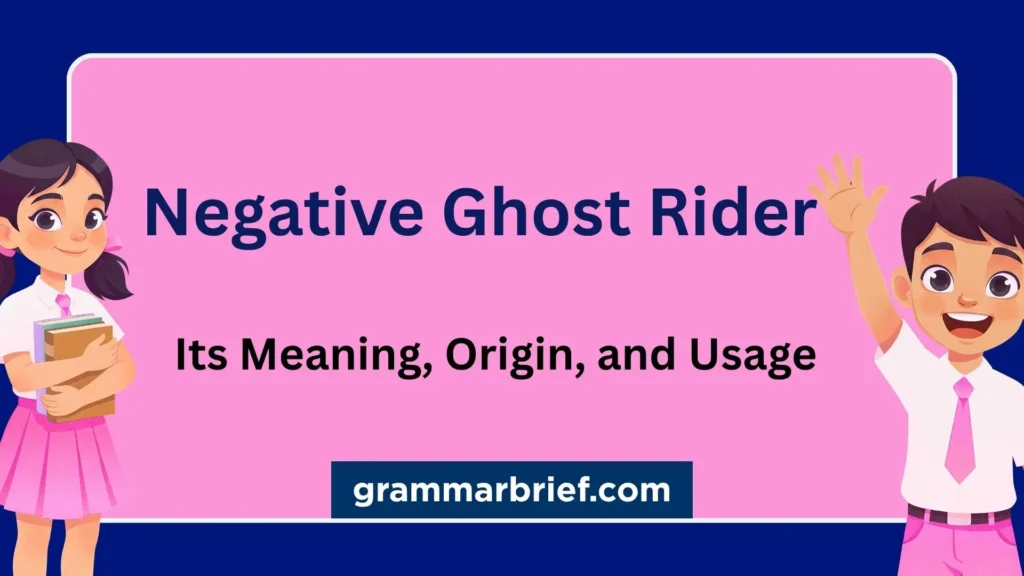

“Negative, Ghost Rider” means “no,” “not possible,” or “that request isn’t approved.” The phrase is strongly associated with the 1986 movie Top Gun, where Air Boss Johnson uses it when responding to Maverick during a radio exchange.
The expression combines “negative,” an aviation-style negative response, with “Ghost Rider,” the radio identifier used for Maverick in the scene. The FAA’s Pilot/Controller Glossary defines “negative” as “no,” “permission not granted,” or “that is not correct.”
Today, people can use “Negative, Ghost Rider” as a playful way to reject an idea, request, or suggestion. It works best in casual conversation, texting, gaming, and other informal settings.
What Does “Negative Ghost Rider” Mean?
The simplest meaning of “Negative, Ghost Rider” is “No, Ghost Rider.” It communicates a refusal or rejection.
The important word is “negative.” In aviation communication, it can indicate that something is not approved, is incorrect, or should be understood as “no.” The FAA specifically defines the term as “No,” “permission not granted,” or “that is not correct.”
“Ghost Rider,” on the other hand, does not mean “no.” It refers to the person being addressed in the Top Gun exchange. Maverick identifies himself as Ghost Rider when contacting the tower, and Air Boss Johnson uses that identifier in his response.
So the phrase can be understood as:
- Negative = no or not approved
- Ghost Rider = the person being addressed
- Negative, Ghost Rider = “No, Ghost Rider”
In everyday English, the phrase usually sounds playful, dramatic, or theatrical. It turns an ordinary “no” into a recognizable pop-culture reference.
Read this also: Helonium Meaning: What It Is, Formula, Origin, and Scientific Importance
Where Did “Negative Ghost Rider” Come From?
The phrase is strongly associated with Top Gun, the 1986 film starring Tom Cruise as Pete “Maverick” Mitchell.
In the movie, Maverick contacts the tower and requests a flyby. Air Boss Johnson rejects the request with the response, “Negative, Ghost Rider, the pattern is full.” The exchange is documented in movie quote references.
The wording fits the aviation setting because “negative” was already an established negative response in aviation communication. The FAA continues to define the term that way in its Pilot/Controller Glossary.
The combination makes the line distinctive. Instead of simply saying “no,” the movie uses radio-style language and a specific identifier.
The Top Gun Connection
The scene centers on a simple request and refusal.
Maverick asks the tower for permission to perform a flyby. Air Boss Johnson denies the request because the pattern is full.
The phrase therefore has a straightforward meaning in its original context: the requested flyby is not approved.
That context also explains why the expression sounds more dramatic than an ordinary “no.” It comes from a military-aviation setting and is delivered as radio communication.
What Does “Ghost Rider” Refer To?
In the Top Gun exchange, Ghost Rider is the radio identifier Maverick uses when communicating with the tower. He identifies himself as Ghost Rider before requesting the flyby, and Air Boss Johnson addresses him using the same name.
This distinction is important. “Ghost Rider” does not independently mean rejection. The refusal comes from “negative.”
The structure is simple:
Negative = no
Ghost Rider = the person being addressed
Together, the expression essentially means “No, Ghost Rider.”
How Is “Negative Ghost Rider” Used Today?
Outside Top Gun, people can use the phrase as a humorous way to reject something. You don’t need to be discussing airplanes or aviation for the meaning to work.
For example:
“Want to stay up until 3 a.m. and finish this game?”
“Negative, Ghost Rider.”
Here, the speaker simply means, “No, I’m not doing that.”
The phrase also works in texting, gaming, social media, and casual conversations. Its purpose is usually not to make the refusal more precise. Instead, it adds humor, personality, and a movie reference.
The audience matters, too. Someone familiar with Top Gun will likely recognize the reference. Someone who has never seen the film can still understand the phrase from context because “negative” signals a rejection.
Examples of “Negative Ghost Rider”
Here are several natural ways to use the expression in casual conversation.
Rejecting a Suggestion
“Should we order pizza for the third night in a row?”
“Negative, Ghost Rider. Let’s cook something.”
Here, the phrase simply means “No, let’s not.”
Saying Something Isn’t Possible
“Can we finish the whole project tonight?”
“Negative, Ghost Rider. We need more time.”
In this example, the speaker means that the proposed plan isn’t realistic.
Turning Down a Request Playfully
“Can I borrow your new headphones for a month?”
“Negative, Ghost Rider.”
The response is still a refusal, but the movie reference makes it more playful than a plain “No.”
Using It in an Online Chat
“Anyone want to play another five-hour match?”
“Negative, Ghost Rider. I’m logging off.”
This works because casual online conversations often leave room for humor and pop-culture references.
“Negative Ghost Rider” vs. Other Ways to Say No
Different ways of refusing something can carry different tones. The right choice depends on the situation and your relationship with the other person.
| Expression | Tone | Typical Use |
| No | Neutral | General situations |
| Nope | Casual | Friends and texting |
| Not happening | Informal, emphatic | Rejecting an idea |
| Unfortunately, no | Polite | Professional situations |
| Absolutely not | Strong | Firm refusals |
| Negative, Ghost Rider | Playful, theatrical | Casual or humorous situations |
The main difference is the pop-culture reference. If you need to communicate a decision clearly, “No” or “Unfortunately, no” may work better.
If you’re joking with someone who understands the reference, “Negative, Ghost Rider” can make an ordinary refusal more memorable.
Is “Negative Ghost Rider” Formal or Informal?
“Negative, Ghost Rider” is an informal expression. It works best when the conversation allows humor, familiarity, or pop-culture references.
You might use it with friends, gaming partners, family members, or coworkers you know well. In those settings, the phrase can make a routine refusal sound lighthearted.
However, humor doesn’t automatically make a refusal polite. In a serious workplace discussion, customer-service exchange, formal email, or sensitive conversation, the expression can sound flippant.
For example, instead of:
“Negative, Ghost Rider.”
a professional response could be:
“Unfortunately, we can’t accommodate that request.”
The second response is clearer and better suited to a formal setting.
Read this also: Guess What, Chicken Butt! Meaning, Origin, and How to Use It
Common Misunderstandings About “Negative Ghost Rider”
A few points can cause confusion when people encounter the phrase for the first time.
“Ghost Rider” does not mean “no.” In the Top Gun exchange, it identifies Maverick during the radio communication. The word “negative” supplies the refusal.
The phrase is not normally a literal reference to a supernatural rider. Its recognizable meaning comes from the movie’s aviation-radio context.
You don’t have to be talking about aviation to use it. Modern speakers can use the phrase as a pop-culture reference in ordinary conversation.
It isn’t automatically a more polite version of “no.” A humorous refusal can work well with friends, but it may sound dismissive when the situation calls for a serious response.
Frequently Asked Questions
Not necessarily a blunt “no.” Depending on the context, it can mean “not approved,” “not possible,” or “that won’t work.” The underlying idea is still a negative response.
The phrase uses “negative,” a term used in aviation radio communication for a negative response, along with a radio identifier. That combination gives it a distinctly aviation-style sound.
It can be, but sarcasm isn’t required. The phrase is usually playful or theatrical, and the speaker’s tone determines whether it sounds humorous, sarcastic, or dismissive.
Yes, depending on the situation. With friends, it may sound lighthearted. In a serious conversation, however, the movie reference could make the refusal seem flippant or dismissive.
“Negative, Ghost Rider” is the clearer punctuation when writing the phrase as a direct address. The comma separates the negative response from the person being addressed.
“Negative, Ghost Rider” is the clearer punctuation when writing the phrase as a direct address. The comma separates the negative response from the person being addressed.
Conclusion
“Negative, Ghost Rider” is a playful way to say no, reject an idea, or indicate that something isn’t possible. Its distinctive wording comes from the aviation-style language and radio exchange featured in Top Gun.
Use the phrase when a casual, humorous tone fits the situation. For professional, serious, or sensitive conversations, a straightforward response such as “Unfortunately, no” or “That won’t work” is a better choice.